After 50 years under the influence…
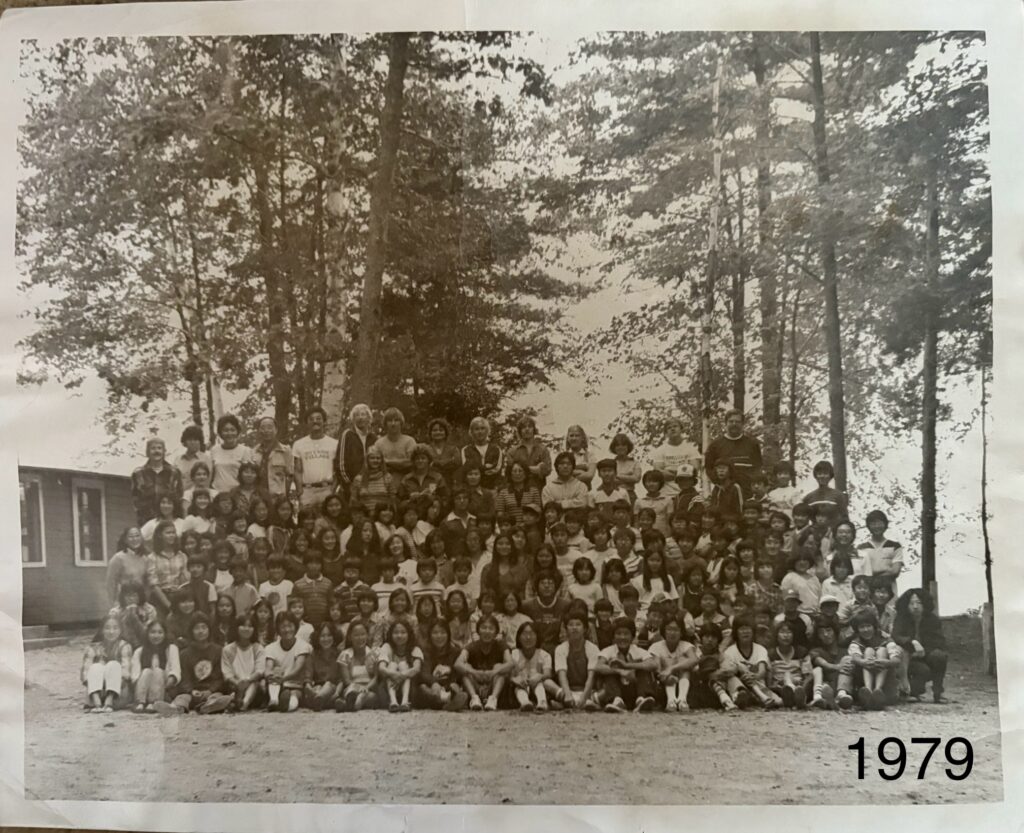
I began writing this as a belated substitute for comments that I was unable to make at SJC’s fiftieth anniversary in August 2025. As I put thoughts to keyboard, an avalanche of minutiae and memories overcame me. The more I wrote, the more I needed to write. I apologize for the corpulence of this questionably jocular chronicle, but brevity is not one of my virtues. I write this to shed a little light on SJC’s obscure origins and outsized impact, demystify our peculiar brand of institutional madness for the uninitiated, and establish a semifactual historical record before complete derangement triumphs.
I also want to share that in July 2025, I won the ‘unfortunate disease lottery’ — twice. That’s when I discovered I have been living with Amyloidosis and Parkinson’s for years, involuntarily coping with their adverse emotional and physical symptoms since at least late 2022. Looking back on my conduct at SJC in 2023 through 2025 I particularly lament that my dopamine-starved brain rendered me more addled than usual, uncharacteristically sullen, and inarticulate. I was not fully present while at camp and ask forgiveness from anyone I offended. I am now receiving excellent care; my idiopathic humor notwithstanding, there has been considerable improvement.
While my involvement with SJC is now limited, my affection remains stubbornly, unapologetically rooted there. SJC has coalesced into a touchstone across generations; campers I inadvertently traumatized are now parents sending their children to camp. The circle set in motion two score and ten years ago remains ever-growing, resilient—unbroken.
Moonwalking through a Six-Minute Eternity
The young lad fidgets unconsciously, nervous as a long-tailed cat navigating a room full of rocking chairs. He’s ten years old, desperately rehearsing in his mind. The emcee announces him and his ambitious act: to lip-synch and dance Michael Jackson’s iconic ‘Thriller’. The track runs an excruciating 5 minutes, 57 seconds—an eternity for even seasoned performers. The audience roars its encouragement, knowing this shy youngster is desperately out of his comfort zone. The music kicks in… he’s off to a brilliant start: sharp moves, fluid steps, and crisp choreography. The crowd claps to the beat, and his face erupts into a broad smile.
At the two-minute mark, the sheer complexity of the routine catches up with him. The once-confident boy slows down, terrified and confused; his choreography evaporates. Within seconds, his smile disappears and he freezes. In similar predicaments, a debut performance grinding to a halt like this would be met with swift adolescent ridicule and lasting shame. But in an instant, he’s flanked by several counselors. Knowing the routine by heart, they step forward without hesitation and form an ad hoc chorus line, hoofing it alongside the now-beaming performer. The entire ensemble receives uproarious applause, cheers, and whistles. The triumphant Michael imitator exits the stage full of pride, confidence, and the roaring approbation of the assembled camp.
This memorable performance captures the magic of SaeJong Camp (SJC)—a community that instinctively protects, encourages, and supports its own. It’s an extended family of younger and older Korean Americans (KAs) remarkably intentional about lifting each other up and having fun together. It is a gathering of older ‘siblings’ keeping a watchful eye on younger campers, shepherded by a dedicated staff who eagerly return to give back—often after a decade or more as campers themselves. It is an annual, week-long convocation where you reunite with over a hundred friends: kith and kin you might only see once a year, but keep for a lifetime.
Passing the Whistle
I’ve had the singular privilege and profound pleasure of being an active part of SJC for about thirty of its first fifty years. My mother, Shin Hyung Kim (1928–1996), was director for the first four years. Like many Korean women of her generation, she was a force of nature, not easily dissuaded or discouraged once she made up her mind (e.g. summary and vigorous corporal punishment). Like my Dad, she came to this country as a student in 1949 (by boat), earned her undergraduate degree here, and went on to receive a Master’s degree in Social Work—perhaps the first woman from Korea to do so. She was a statuesque 5’9”, freakishly tall for Korean women of her era, indefatigable, indomitable, charismatic, and radiating gravitas. She possessed an incandescent smile and a kind word for everyone. To conclude my non-biased assessment, let me say that I thought Mom was beautiful in every way.
Mom was a quixotic choice to lead a fledgling ethnic youth camp, given that her most relevant credential was working as a counselor for a single summer in the 1950s. Yet at the tender age of 48, she hurled herself into the breach with the supreme confidence that comes with blissful inexperience. Positive reviews and FOMO inexorably spread via the Korean mothers’ grapevine, and SJC enrollment steadily increased.
When early 1980 rolled around, she approached me, asking if I would consider taking over as director. She and her co-founders realized the burgeoning (and increasingly entitled) campership needed on-site leadership less like a doting favorite Auntie, and more like a mercurial Marine DI (Drill Instructor). My role to that point had been helping train the staff, running pre-camp, and doing whatever else needed doing. By the summer of 1980, I had completed my undergraduate degree in East Asian studies at Ann Arbor (as there were no Korean or KA studies in that part of the late Jurassic Period) and had lived in Korea for most of 1978–79. I spent that time earnestly studying the language, grasping at rudiments of Tae Kwon Do, and ineptly experiencing the culture firsthand.
I returned speaking Korean with the fluency of an overzealous, six-year-old evangelist who learned the language parroting a temperamental wireless. Armed with just enough Korean culture to be dangerous, I assumed the mantle of director and began infusing the program with as much of it as I could.
I was deeply involved for most of the camp’s first fifteen years before stepping back as my professional life evolved. I later brought my twins for ten consecutive years so they could experience the ingenious conspiracy their Grandmother helped engineer. Eventually, in the absence of any other unsuspecting prospects, at the behest of Victor Chull Kim, I resumed the mantle of director around 2011. Ultimately, dotage and the arrival of a superior alternative convinced me to pass the whistle to more capable hands a few years ago—a decision that has proven eminently prudent.
Exiled to the Woods: The Class of ’76
SJC’s venerable roots reach back to the 1971 founding of SaeJong School, a Saturday morning Korean language program housed at Westminster Church of Detroit, where my parents served as elders. By 1976, my mother and three of her likeminded friends discovered that the church operated an idyllic, if notoriously rustic, forest-shrouded camp on the pristine, crystal-clear shores of Higgins Lake, an easy four-hour drive away. The temptation to trundle up their offspring and exile them deep in the woods for a week of coed fraternization proved irresistible. SJC launched that summer with some forty reluctant conscripts—their own children, dragooned nieces and nephews, and other assorted innocents—backed by a motley crew of counselors that included two of my high school friends, one of Chinese stock and the other of Irish extraction
While SJC has bestowed countless blessings on generations of campers, the motivation of this formidable quartet—Mrs. Nam, Mrs. Cho, Mrs. Lee, and the undisputed ring-leader, my mother—was born of a poignant, tragic history. Having survived the brutal Imperial Japanese occupation of Korea (1910–1945), my parents’ generation knew firsthand the Empire’s methodical, unrelenting efforts employed to exterminate Korean cultural identity. During those dark decades, the invaders criminalized the use of spoken and written Korean, forcibly replacing it with Japanese language and script. They coerced the occupied populace to abandon ancestral names for Japanese ones and erased the country of Korea entirely from maps of the period, rendering the formerly sovereign kingdom to a base colony of Japan.
A principal goal of Japan’s colonial agenda in Korea grew more clear and unabashed as the occupation progressed: cultural genocide. Indisputable evidence of Japan’s efforts to make Koreans “loyal subjects” is the reality that my parents’ generation was at one time fully fluent in Japanese. Survivors of this period are increasingly few, and often reluctant to admit the fact that under duress they spoke the language of the invader. Their reticence to talk freely about life during the 36 year occupation reminded me greatly of WWII veterans’ discomfort in discussing the realities of combat.
The Great Korean Matchmaking Plot (aka the Korean Mothers’ Mafia)
Fast forward to the 1970s in Southeastern Michigan. The emotional trauma of Japan’s efforts to erase millennia of Korean identity was still palpable among these diasporic mothers. As is frequently the case with Korean matriarchs, they translated emotion into bold, decisive action. Channeling righteous indignation smoldering since their youth, they created a highly practical, resilient form of resistance. The Saturday language school helped ensure their unique language would not disappear on their watch. SJC was the next logical step—creating a joyful,
low-pressure networking opportunity for future generations. The founders devised a shrewd, strategic, and predictably practical vision for their progeny. They realized that as they desperately wanted their children to carry their race forward intact, said children needed a place to meet, socialize, and fall in love with fellow KAs. Q.E.D.: at its absolute core, SJC started as an ingenious, maternally orchestrated matchmaking enterprise disguised as a summer camp—a joyful incubator engineered to keep a community thriving and to deliver a permanent, defiant retort to the inhumane, Illegitimi who had tried to culturally erase them for thirty-six harrowing years.
[To be continued]
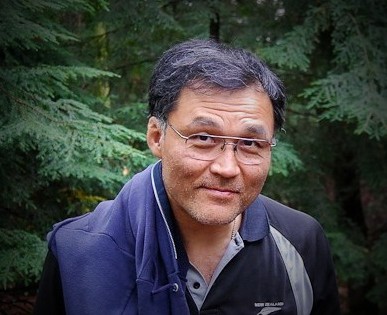
Doug Kim
Now retired, Doug has spent over 30 years as a steady presence at Sae Jong Camp, serving as a counselor, staff trainer, and Director. Carrying forward the work his mother helped begin, he helped forge the core Korean American traditions, cultural pride, and lifelong bonds that continue to define our shared legacy across generations.