Morning
Riot Control and the Art of Junior Wrangling
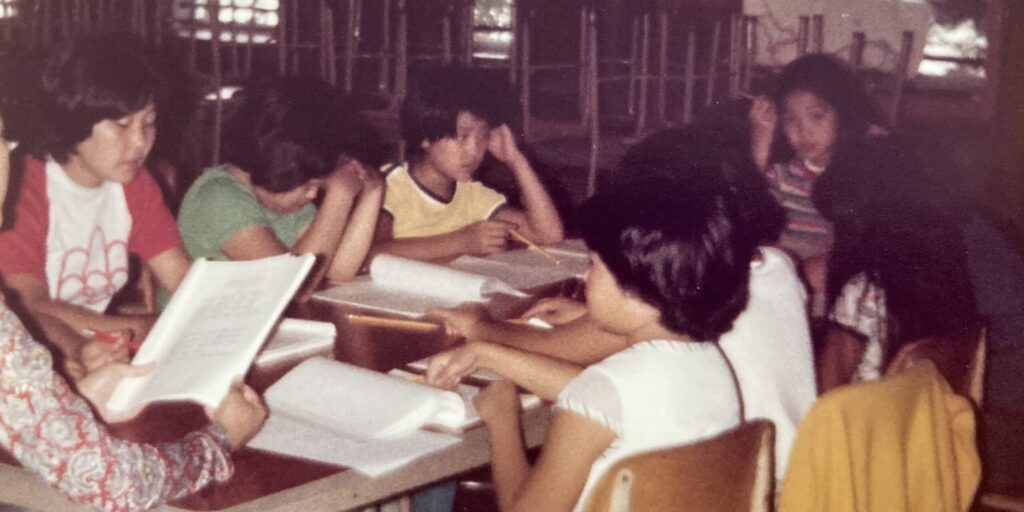
After breakfast, capers, and cabin clean-up, morning classes begin. Principally arranged by age into junior, intermediate, and senior groups, campers circumambulate the campus for sessions in Korean language, culture, and “Reflection.”
Language is a cross between creative drilling in basic Hangul (한글), the Korean alphabet, spoken Korean, and low-level riot control. In many ways this struggle for knowledge has changed little since the early years of SJC when the warmly intimidating Mrs. Lee and intentionally stern Mrs. Nam tried to pass along the beauty of Korean to their linguistically challenged charges. The objective is not mastery of the written or spoken word, rather to provide some familiarity with it, useful phrases and moreover to pique the campers’ interest. Culture sessions range from counselors sharing pictures and impressions from recent trips in Korea to in-depth explorations of K-pop, misconceptions about the Korean War, and the oft-forgotten fact that the peninsula is technically at war—as it has been since 1953. Topics vary according to counselors’ expertise and interests, keeping things fresh. “Reflection” (formerly known as “Identity”) is a cross between open-ended, counselor-facilitated discussions and peer-to-peer self-help. Since staff are not mental health professionals, they avoid being prescriptive and instead provide a forum for commiserating and sharing coping strategies.
The youngest, most energetic campers, our “Juniors,” have their own multi-hour morning “class” that is notoriously kinetic and “taught” by only the most intrepid SJC staff. Cat-herding has proven invaluable basic training for counselors who draw the delight of wrangling juniors.
At this point in the proceedings, the author begs pardon of the gentle reader. Special dispensation is requested for a digression into an often overlooked aspect of SJC, one that is nonetheless fundamental to understanding our lineage. To avoid historical injustice and sin of omission, a field trip to the camp’s eponym is warranted.
Steve Jobs of the Choson Dynasty
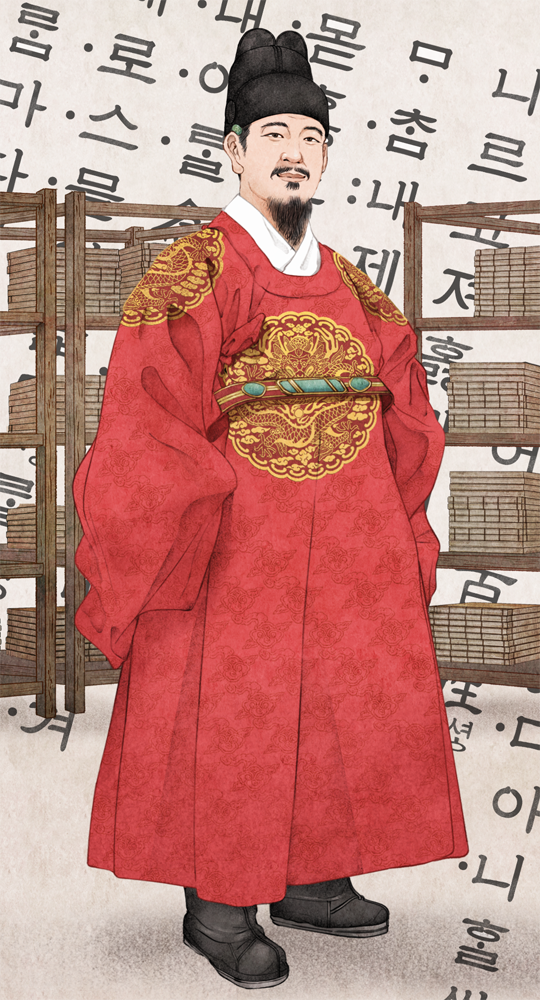
To appreciate SJC’s provenance, we have to take the way-back machine to the 15th century and meet King SaeJong the Great (1397–1450). He is the most celebrated of Korea’s monarchs: a progressive, Renaissance polymath possessed of a dangerous love for the common people. His accomplishments include a first-of-its-kind standardized rain gauge distributed nationwide in the 1440s, backing a self-striking water clock, compiling a standard manual for farmers, and granting maternity leave of about 100 days to government servants who gave birth, including their husbands. SaeJong’s greatest legacy is why our camp bears his name.
In his era, written language was gated behind Classical Chinese—a monstrously complex system of thousands of intricate characters requiring a lifetime of wealthy leisure to master. Consequently, literacy was the protected playground of elite aristocrats and scholar-monks: the 1% of their time. Much like secretive, largely inaccessible Latin did for the pre-Reformation Catholic Church, this linguistic monopoly concentrated power in the hands of the few.
SaeJong realized he could never govern fairly or effectively if he could not communicate directly with his subjects. So, he commissioned a cadre of scholars to engineer a brand-new writing system. He commanded it be simple—so simple, as he famously noted, that “a wise person could master it before breakfast, and even a fool could learn it in ten days.”
The result was Hangul, unveiled in 1443, fully forty-nine years before Christopher Columbus set sail for the Orient, declined asking for directions, and wound up on holiday in the Caribbean. One wonders how many days Columbus would have needed to learn Hangul.
In its original form, Hangul consisted of seventeen consonants and eleven vowels. Over time, it streamlined down to its modern twenty-four essential letters. (Interestingly, two letters less than the American/English alphabet.) The design is so elegantly phonetic that SaeJong’s scholars boasted any sound the human vocal cords can utter could be captured on the page.
In short, it was an unprecedented triumph of UX design—what software engineers today would revere as pure “user-friendly architecture.” It was so mechanically intuitive that centuries later, it ported seamlessly to mechanical typewriters and digital keyboards—a technological leap that Chinese characters and neighboring Japanese scripts spent decades clumsily hacking solutions to match.
SaeJong’s invention propelled modern Korea to an effectively universal literacy rate—a cultural feat celebrated with an official national holiday in both the North and South. In a practical sense, he was the Steve Jobs of the Choson Dynasty: dismantling a complex, elite, user-hostile operating system and boldly democratizing it for the masses. Much like a heretical Martin Luther prying the Bible out of ecclesiastical Latin into the vulgar tongue, SaeJong rewrote the rules of power and privilege. Centuries later, the script still honors its creator’s original warranty: accessible to the novice by lunchtime, and completely mastered by next week. (Fine print: mastering Hangul is not the same as mastering Korean.)
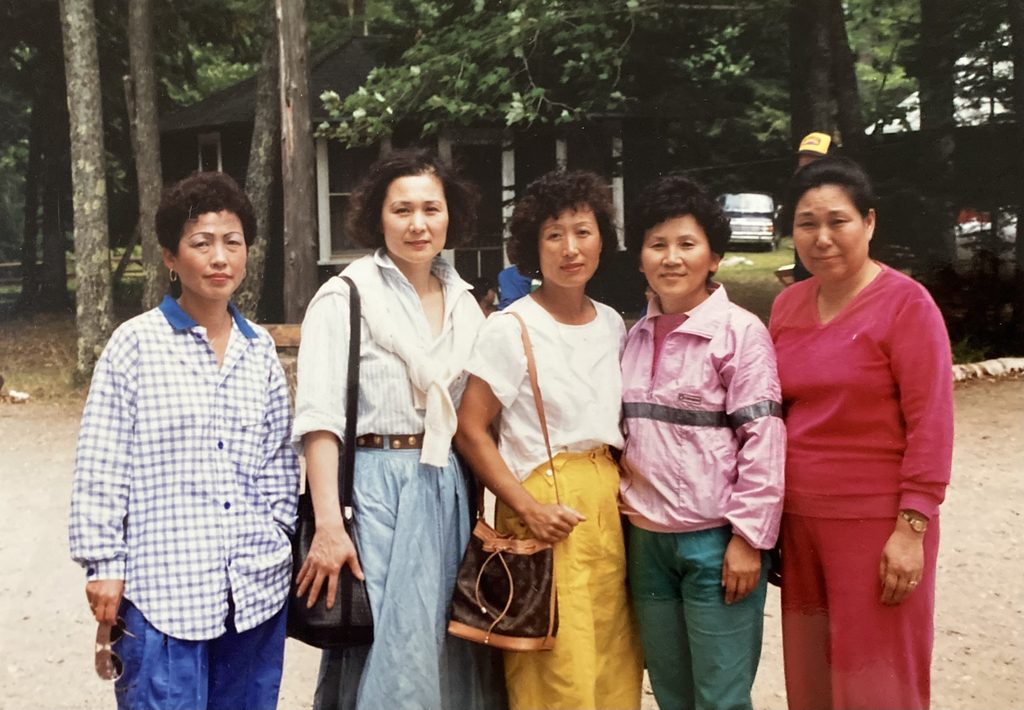
When my mother and her cohort named their school and camp for SaeJong, they weren’t casually pulling a famous influencer out of a history book. They were deliberately invoking a five-hundred-year-old insurgent who proved that an alphabet could be a nation’s ultimate survival kit. By teaching Hangul on Saturday mornings in Detroit, and by conjuring an annual gathering of the clan on the shores of Higgins Lake, those fiercely resilient matriarchs were carrying SaeJong’s torch—ensuring that their culture would never be extinguished.
It is only fair to note that all four founding mothers were knowingly aided and abetted by their compliant husbands. Although these men reflexively insisted—no doubt fearing summary household reprisal—that they were merely “following orders from their superiors,” they were de facto co-conspirators. They provided crucial material aid and abetment to the fantastical ambitions of their wives. In fact, several were eminent, licensed medical doctors who willingly cleared their professional calendars every August, reporting for duty in the Michigan woods as unpaid camp medics on call 24/7.
Midday
Space Ghost: SJC’s Definitive Shibboleth
Once morning classes are complete, the entire camp reconvenes in Frehse Hall (aka Fellowship Hall) for what is euphemistically referred to as “Music.” This misnomer is applied to the daily 45-minute sing-along fest wherein campers are introduced to, reacquainted with, or joyously reunited with songs about doughnuts, shenanigans in the Swiss Alps, a horseless cowboy named “Joe,” Buffalo siblings, and odes to WC—as well as favorite Korean songs like “Sah Rang Haeh” (사랑해, “I Love You”) and “San Tokki” (산토끼, “Mountain Rabbit”).
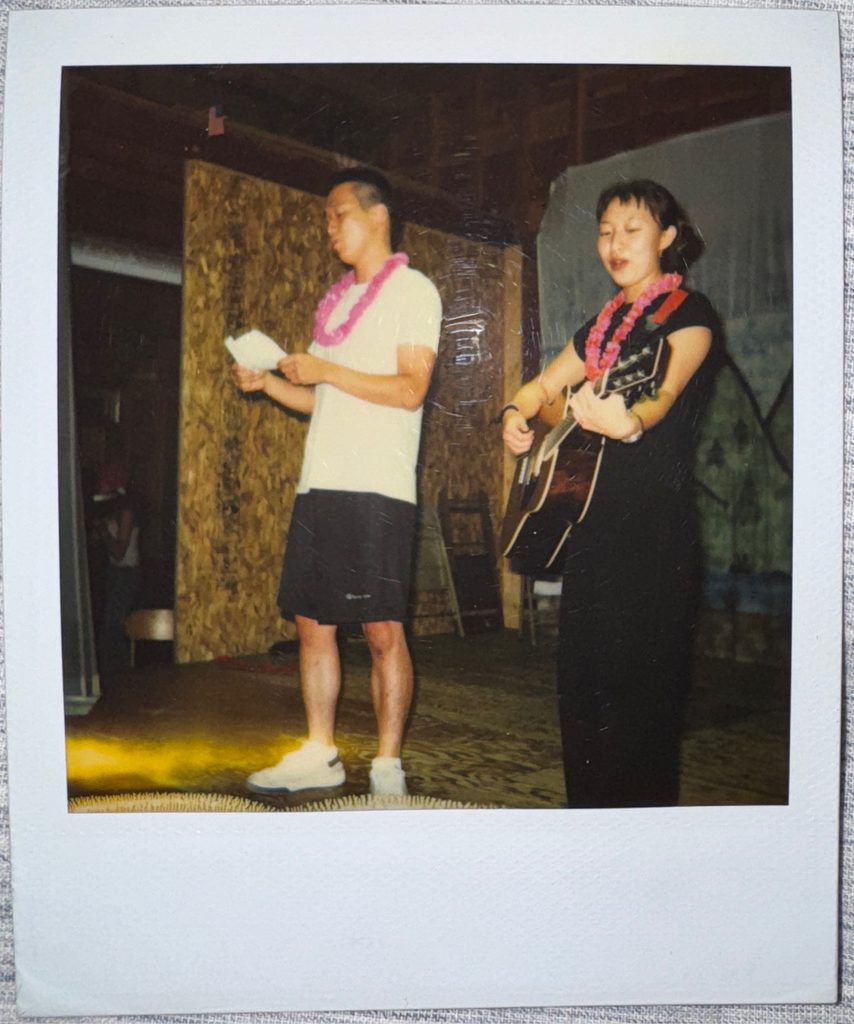
Interspersed among this slapstick repertoire are genuine, tear-jerking anthems: Bill Withers’ “Lean on Me,” Joni Mitchell’s “The Circle Game,” Green Day’s “Good Riddance (Time of Your Life),” and “Thread,” an original ballad penned by an SJC alumna that has attained high sentimental status. Music class, too, has liberally absconded with a number of songs from Camp Westminster’s non-secular repertoire, crucially adding elements of empathy, support, and community to SJC’s more serious canon. A good example of this is a slightly modified version of “Something Beautiful” by Bill and Gloria Gaither.
In the early days, music class consisted of our dear, heroic Mrs. Cho— two-fisted accordion in hands—bravely attempting to teach traditional Korean songs to youngsters who were bewildered by melody and language. “Music” is now led using digital projectors, a modern PA system, and guitar-wielding counselors—as well as an occasional counselor/piano man, like Alex Bae. Some say this is an improvement; some say otherwise.
Upon inspection, “Music” is revealed as the vehicle that transmits much of the camp spirit at SJC. This conduit includes the “camp clap,” game chants, and, importantly, immerses campers in the arcane verbiage and intricate gesticulations of “Space Ghost”—a routine shanghaied from the 1988 Tom Hanks movie Big, which had itself lifted it from an old playground clapping rhyme. Our version is mildly adulterated, but has fermented into the definitive SJC shibboleth. This convoluted, nonsensical ritual is analogous to Korea’s belligerently pungent national delicacy, kimchi—a highly sophisticated, potentially lethal acquired taste that is fiercely cherished if you grew up with it, and deeply baffling, even understandably off-putting, if you didn’t. (Not unlike akvavit—or so survivors of this Nordic jet fuel claim.)
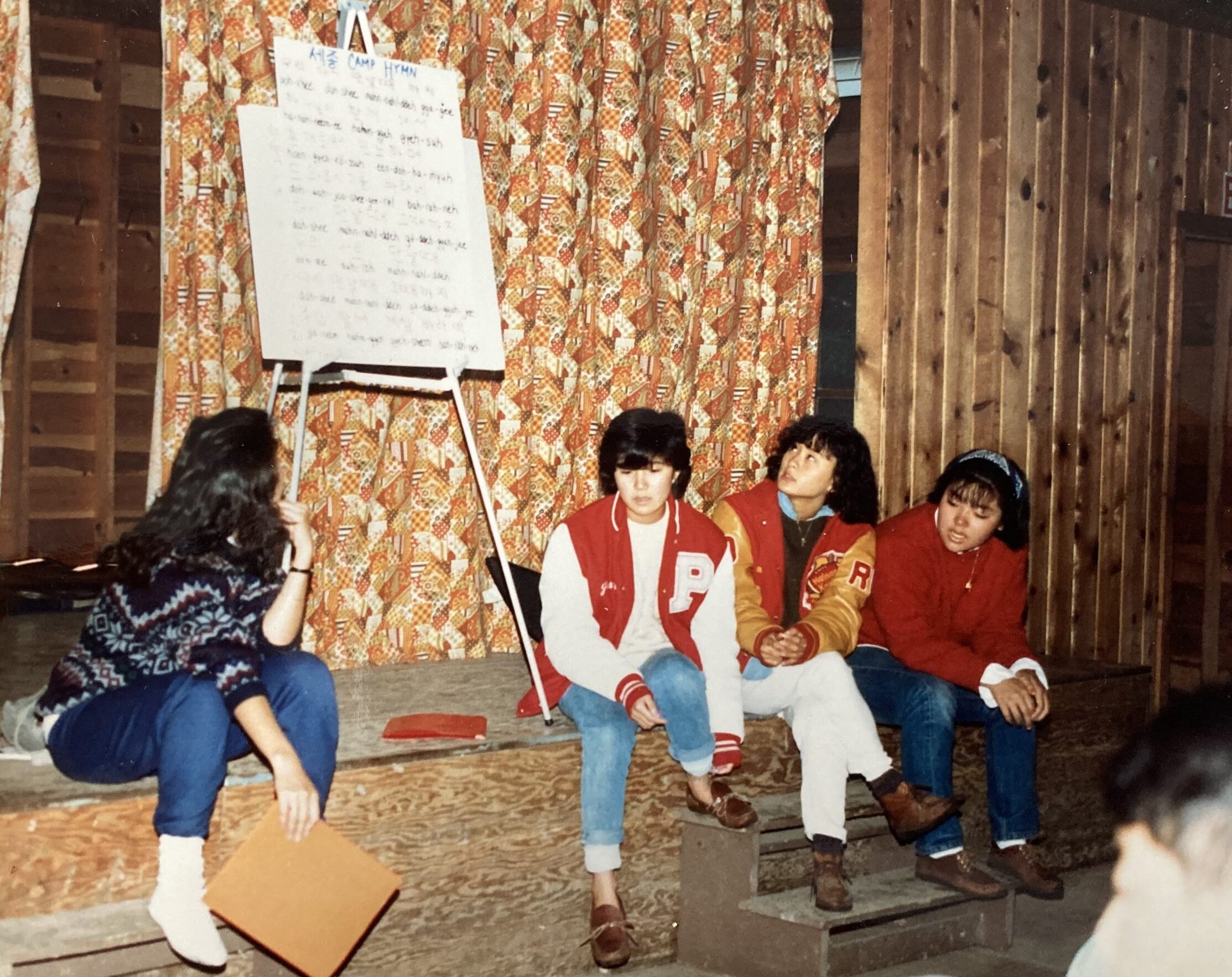
A beautiful intergenerational transmission has blossomed over the years as former campers—now parents themselves—share camp songs with their kids (current SJC campers) on their drive home. References to “Horns on Automobiles” or the “Matterhorn” provide rare and joyous sources of bonding. The SJC spirit is passing to a new generation—sans screens or keyboards.
The sheer absurdity and simplicity of the bizarrely curated SJC canon make it a perfect, albeit cacophonous, after-meal mood energizer. Conversely, serious, sentimental songs are intoned reverently—campers affectionately intertwined arm in arm—toward the close of camp when everyone realizes that the week is ending all too soon.
Squid Game on a Higgins Lake Budget
“Music” is quickly followed by lunch, the busiest time of the day. During the meal, colorful marbles are randomly secreted into the pockets or hoods of three unsuspecting innocents. After the waiters clear the tables, the program director—acting as a volatile hybrid of an emcee and a gym teacher—announces it’s “Green Hornet” time. Everyone laughs nervously, checking their pockets to see if fate, or a vindictive rival, has planted a marble on them.
The three hapless victims reluctantly take center stage, wondering what kind of day destiny has in store for them. The program director bellows: “Is today a GOOD day or a BAD day?” Invariably, the frantic cries of “GOOD day!” from the marble holders are mercilessly drowned out by a hundred-strong roar for a “BAD day!”
On the rare occasions that a GOOD day is declared, the conscripts—usually wide-eyed juniors—get to pick a prize from a selection of small toys or candy. However, if the condemned are older campers or, worse, staff members, a BAD day is pronounced and the public performance of a dubious task is required. The relatively benign version: a tight rubber band is stretched around the victim’s head, squashing the nose flat. It must be worked down past the chin, no hands allowed, scrunching, grimacing, and wriggling whatever will move: cheeks, jaw, tongue, and (for the gifted) ears. At the other extreme is the deceptive named “Egg Roulette.” In this low-budget version of Squid Game, several eggs are gleefully cracked over the victims’ heads, one after the other. Unbeknownst to the participants, the rumor that some of the eggs are hard-boiled is a total lie; they are ALL raw.
While Green Hornet intentionally exposes subjects to good-natured public embarrassment, it is universally understood that the social contract at SJC is a minor sacrifice of personal dignity for communal bonding and mutual amusement. Through shared vulnerability and humility, mutual affection and esprit de corps are forged in countless hilarious, unkempt, and indelible ways.
A Pringles Can Post Office: Late-Night Censorship and Incipient Teenage Romance
During lunch, additional strands of SJC’s unseen community sinew are forged as “ChinguGrams” (CGs) are dutifully delivered to their intended recipients—”Chingu” (친구) being the Korean word for “friend.” CGs are small, Post-it-sized notes sent between campers and staff through a woefully unsophisticated, embarrassingly manual intra-camp mail system. The process starts with a sender jotting a kind word, a humorous jibe, or token of affection at the dedicated writing station in the dining hall. Once written, the note is folded, addressed to the party in question, marked with their cabin number, and slipped into one of the cleverly converted Pringles cans labeled for each cabin or “STAFF.”
At night, staffers inspect each note—keeping the contents strictly confidential-ish—while confiscating any truly inappropriate missives. Campers look forward to CGs like sailors pressed into service abroad months after being abducted—desperate for any word from home and family. Once read, they are frequently replied to, and the tribe’s mutual affection and intangible bonds grow ever stronger. Predictably, vetting CGs provides an inimitable source of endless late-night giggles for staff tasked with these delicate censorship duties. Long after camp ends, drawers and keepsake boxes across the country remain filled with these cherished slips of paper—enduring mementos of friendship, camaraderie, nascent infatuations, and personal triumphs.
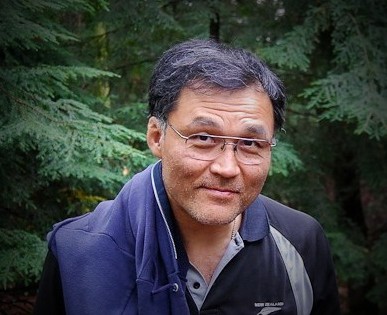
Doug Kim
Now retired, Doug has spent over 30 years as a steady presence at Sae Jong Camp, serving as a counselor, staff trainer, and Director. Carrying forward the work his mother helped begin, he helped forge the core Korean American traditions, cultural pride, and lifelong bonds that continue to define our shared legacy across generations.